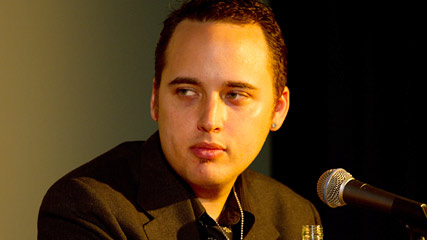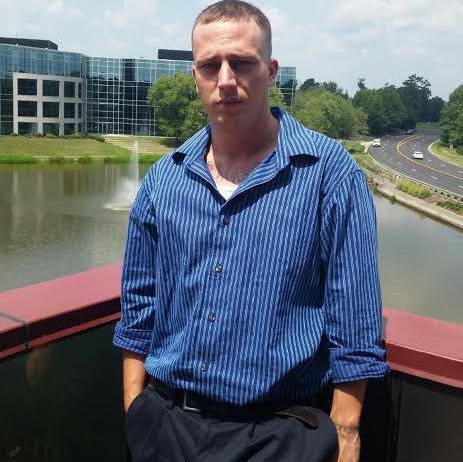
A 20 year old hacker from the seaside resort town of Deal in Kent southeastern England created the Call of Duty Trojan Horse that poses as a patch for the Call of Duty game. It remotely monitored gamers' keystrokes which gave him access to their bank and credit card numbers along with Paypal accounts and passwords. He created this patch that made people believe that it was a fix for the game, when it was downloaded it served as a key-logger. He later sold the data from 1 U.S. dollar to 5 dollars each and kept the profits in an account he created in Costa Rica. During a drunken stupor he got caught after breaking into Walmer Science College in Kent. Police later raided his apartment where they found more than 30 credit card details and passwords. He was later charged with three counts of burglary and fraud charges and got 18 months in jail.
Ochoa is allegedly a member of a hacking group called CabinCr3w which allegedly planned the attacks under the banner of Anonymous. He hacked The West Virginia Chiefs of Police website www.wvcop.com. He obtained the entire user database that contained usernames and passwords for 150 law enforcement officials. He also obtained the addresses, and phone numbers from them.
Sabu was a computer hacker and ringleader of the Anonymous offshoot group LulzSec. He was an unemployed computer hacker that lost his job at Limewire after it got hit with multiple lawsuits for copyright infringement. He received welfare and was the legal guardian of two young children. Prior to forming LulzSec he was a part of another collective called Internet Feds which was affiliated with Anonymous. He helped in an incident which e-mails were stolen from HBGary accounts. He helped in leaking passwords, altering several employees' Linkedln profiles and leaking a database of X Factor contestants containing contact information of 73,000 contestants. They claimed responsibility for several high profile attacks, including the compromise of user accounts from Sony Pictures in 2011. They also took down the CIA website offline. Now he is helping the FBi track down and gather evidence against his associates, tweeting misinformation and protecting the CIA among other government and financial institutions from hackers. He was charged with aggrevated identity theft and a two-year prison sentence to hang over his head if he did not help the FBI or CIA. They bribed him with his kids by telling him if he cooperated he can be with them. He pleaded guilty in August 11, 2011 to more than ten charges relating to his hacking activity. He did help take down the other high-level members of LulzSec and Anonymous. The FBI has provided him with a PC laptop to help take down other members. He currently works with the government to protect and prevent assault from hackers.
Kim Schmitz, also known as Kimble or Kim Dotcom, was born in Germany on January 21, 1974.
He is a known computer criminal and businessman. He is also one of the leaders of Megaupload.
He has been arrested several times for credit card fraud, computer fraud, insider trading, embezzlement and handling stolen goods.
Although he used to be known for his arrogant and flamboyant style, he has abandoned this way of life and is now acting as an advisor to Internet startup companies such as Friendster, iFilm, Gizmodo and Megaupload.
Project Organizer of TCNiSO, a group specializing in cable modem hacking. On November 2nd, 2009 was charged in Boston with conspiracy and aiding and abetting computer intrusion and wire fraud.
Stephen Watt is a computer hacker who went by Jim Jones and then Unix Terrorist (the_ut for short). He has been described as an introvert with few close friends who was obsessed with computers. In the late 1990s and early 2000s, that hacker was part of a band of self-proclaimed black hats that opposed the publication of security vulnerabilities and resisted the hacking scene’s shift from recreational network intrusions to legitimate security research. Under the rubric Project Mayhem, the gang managed to hack into the accounts of a number of prominent “white hat” hackers and publish their private files and e-mails. At the 2002 DefCon hacker conference, Watt took the stage with two friends to personally share some of the hacked e-mails.
He was arrested and convicted of writing customized code to help Gonzalez breach networks, including the “blabla” sniffer, which was stored on a server in Latvia and used to steal tens of millions of credit and debit cards from TJX in 2006 and from Dave & Buster’s in 2007. According to court documents, the Secret Service recovered 27.5 million stolen numbers from a server in Ukraine and 16.3 million numbers from a server in Latvia.
The breach cost TJX $200 million according to its 2009 SEC filing.
“I figured out his name years ago, Stephen Huntley Watt, and then the guy wound up getting indicted on the TJ Maxx thing,” says former hacker Kevin Mitnick.
In a profile in Phrack Magazine in 2007, “Unix Terrorist” reflected on the old days:
“Looking back on my involvement in computers, I am very happy that the peak of my activity occurred right during the turn of the 20th century,” he wrote. “Hacking was no longer as simple as manual labor (wardialing, etc.) but finding vulnerabilities and writing exploits and tools was not exactly as tedious and prohibitively time-consuming as it is currently. To say that I would rather commit seppuku than adapt to the challenges of a changing world by auditing code for SQL injection vulnerabilities and client-side browser exploits is not an exaggeration.”
Born in 1959, Emmanuel Goldstein is the founder, editor, and publisher of 2600: The Hacker Quarterly. During his time working on the publication, he testified before the US Congress in 1993, lost a legal battle against the MPAA as one of the defendants in Universal VS Reimerdes (Their unsuccessful attempt to squelch DeCSS), was arrested on August 31st 2004 while filming a demonstration against the Republican National Convention for 'disorderly conduct'. (All charges would be dropped in a preliminary hearing.)
Brian Salcedo was convicted in 2004 of conspiracy to commit wire and computer fraud in violation of 18 U.S.C. § 371 for accessing a home improvement chain's wireless LAN in an attempt to recover credit card numbers. Salcedo gained access to the computer system used by the Lowe's chain of home improvement stores and installed a program to capture credit numbers used during transactions at the Southfield store. Lowe's monitored the intrusions while six numbers were captured. Although Salcedo did not view the credit card numbers, the government claims that the crime could have caused more than $2.5 million in damages. Salcedo initially was charged with 16 counts of wire fraud and unauthorized intrusion but plead guilty to reduced charges as part of a plea bargain. At the time of his arrest, He was on a grant of probation within the guidelines of the Holmes Youthful Training Act. Salcedo was sentenced to 9 years in prison for his involvement. The government claims that at the time of its imposition, Salcedo's sentence was the longest federal prison sentence ever given to a hacker for a computer intrusion offense. Prior to Salcedo’s sentence, Kevin Mitnick held the record with a 68-month sentence. Salcedo appealed the sentence, arguing that the actual harm done rather than the potential harm done should be used as a factor to determine the length of the sentence. On July 10, 2006 the U.S. 4th Circuit Court of Appeals denied the appeal.
Was raised in Meridian, Idaho. Shortly after his parents divorced at 14, he became a part of his local BBS scene and during high school several friends state that he was carrying printouts of hacker zine Phrack and phreaking free phone calls. During his junior year he broke into his high school and vandalized it. In 1991, he would make a physical threat against a ex-girlfriend, be found guilty of assault with a deadly weapon, and sentenced to 5 years in prison. Upon being released in 1995, he started a double-life of doing security tests for various corporate clients and breaking into various private networks after hours. In 1998, his attempts to backdoor federal sites whilest fixing a security hole of the BIND name server daemon would eventually backfire when an Air Force Investigator traced him through his pop-up notifications and in 2001 he was sentenced to 18 months in federal prison.
After his release in 2002 he started a venture with Christopher Aragon, stealing stolen credit card information from other hackers due to his logic that most of them were "all teeth and no shell." From there he moved on to small banks and credit unions listed on the FDIC's website that were unable to afford high end security and was pulling 'virgin' credit card numbers. In April 2004, he was arrested after using 'suspicious' credit cards at the San Francisco's W Hotel and was sentenced to 3 years probation. He would start his own network to sell credit card information, CardersMarket, shortly after Operation Firewall under the handle Iceman. Shortly afterwards he would infiltrate 4 rival networks and blink their sites out of existance in an successful attempt to become the biggest carder site on the internet.
After this, he would absorb DarkMarket and warned people concerning a sting relating to their site and informed members of CardersMarket that DarkMarket Master Splynter was a federal agent. In November 2006, he declared Iceman's retirement due to fears that the feds were after him and handed control of CardersMarket over to Th3CorruptedOne. Eventually, Jonathan "Zebra" Giannone would give information out concerning him after being busted himself when he sold 21 Bank of America Platinum Card numbers to a federal agent for $600. In September 5th, 2007 he was finally arrested by the secret service after an extended investigation. It is also believed that Th3CorruptedOne was a Secret Service informat who infiltrated CardersMarket which is how they were able to obtain information on the measures Butler used to cover his tracks. Upon checking his hard drive they found approximately 1 million credit card dumps. Currently he is in prison awaiting trial and will most likely face a sentence of 30 years to life.
Thomas Swingler was charged in federal court in New York with trafficking in unlawful access devices for his online business http://www.cablehack.net. The site, still in operation, sells "pre-modded" Motorola Surfboard modems for between $38 and $58 that can be customized by the owner without a cable company's knowledge. Among other things, the user can set their own upload and download rates, and change the MAC address — the unique identifier normally hard-coded into a modem. While known as a bot net script kiddie and a general douchebag among various circles, he gained notoriety when he took things to a new level of stupidity by selling preconfigured modified modems to the FBI. It is also important to note that he was kicked out of SBHacker for "breaking a contract, lying, scamming, juping, being an all-around asshole/douchebag, and crossing some legal boundaries by publicly encouraging theft of service and bragging about his botnets".